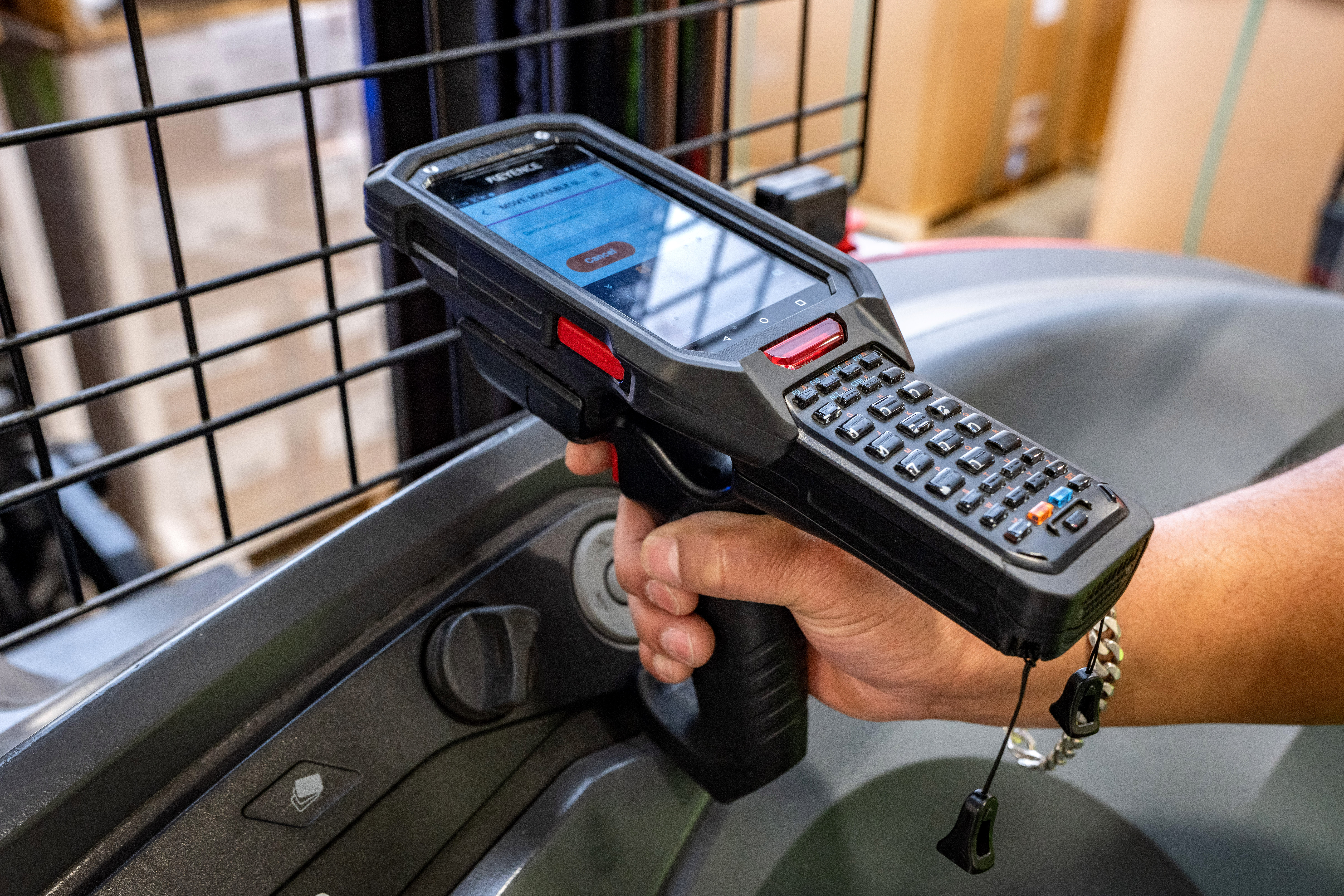
Warehouse inventory accuracy directly determines whether your customers receive the right product on time. The four most common sources of inventory error are receiving mistakes, slotting inconsistencies, pick-and-pack errors, and inadequate cycle counting. Best-in-class 3PL operations maintain 99.9% or higher accuracy through barcode scanning at every touchpoint, rigorous cycle count programs, and warehouse management systems that eliminate manual data entry.
The Connection Between Warehouse Operations and Customer Experience
There’s a long chain between a warehouse pick and a customer’s experience. But the chain is shorter than most people think. When a retailer places an order and receives the wrong item, the wrong quantity, or nothing at all, the downstream consequences move fast: stock outs, chargebacks, and strained relationships, to name a few.
Every order that ships correctly, on time, with the right product in the right condition is a downstream customer satisfaction event that never required anyone’s attention. Every error is the opposite.
For brands that outsource their warehousing to a 3PL, this means that your partner’s operational discipline, including how they receive, store, pick, and ship inventory, is directly shaping how your customers experience your brand. It’s worth understanding what separates the operations that get this right from the ones that don’t.
The 4 Most Common Sources of Inventory Error
Most warehouse errors aren’t random. They’re caused by specific gaps in process, technology, or training that create predictable failure points. Here are the four that account for the majority of inventory inaccuracy:
1. Receiving errors. Inventory accuracy starts at the dock. If product is received without proper scan-confirmation against a purchase order or if damaged goods are accepted without documentation, then the error enters the system before a single pick happens. Receiving is often the highest-pressure, most under-supervised moment in a warehouse, and it’s where many accuracy problems are born.
The best practice? Every unit received should be scanned, with discrepancies flagged and resolved before product moves past the dock.
2. Slotting inconsistencies. Slotting refers to where products are physically stored in a warehouse. When similar-looking SKUs are stored near each other without clear differentiation or when products are put-away in ad hoc locations instead of assigned aisles, mispicks become more likely, especially during high-volume periods.
The best practice? Every warehouse should have clear product zones and processes for directed put-away.
3. Picking errors. The most visible failure point is when the wrong item or quantity leaves the warehouse. It’s usually caused by reliance on paper pick lists or undirected picking (where associates rely on memory rather than system confirmation), combined with inadequate verification before shipment.
The best practice? Teams that rely on scanning and a strong WMS are much more likely to achieve order accuracy. Additionally, when warehouses teams can end their shift pre-picked for the next day, it enables loading teams to double check orders, significantly reducing errors.
4. Inadequate cycle counting. Cycle counting is the ongoing process of physically counting a rotating subset of inventory to reconcile system records with what’s actually on the shelf. Warehouses that don’t count inventory regularly let small discrepancies compound over months, ultimately leading to a significant gap between what the system says and what’s actually there.
The best practice? A warehouse that completes regular cycle counts can quickly identify discrepancies, investigate issues, and resolve problems promptly.
How to Audit Your Current 3PL’s Accuracy Performance
If you’re not sure how your current warehouse partner performs on accuracy, these are the questions to ask.
- What is your order accuracy rate? You’re looking for 99.9% or higher.
- What is your OTIF performance? On-time, in-full is the metric retail partners use to evaluate distribution performance. Best-in-class is 98%+.
- How often do you cycle count, and what’s your reconciliation process when discrepancies are found? Regular cycle counting with a documented reconciliation process is the standard.
- What technology do you use to direct and confirm picks? Scan-to-confirm WMS-directed picking is the standard. Paper pick lists or verbal direction are red flags.
- Can you share your shrinkage figures for the past 12 months? Shrinkage (lost or unaccounted inventory) should be below 0.1% of throughput value. Higher than that warrants a conversation.
A confident, capable 3PL should have immediate access to these numbers. If the conversation requires a lot of hedging or follow-up, consider what that signals about how closely they track operational performance.